Navy Fighters, Air Force B-2 Bomber Rehearse Anti-ship Missions off California


Fighters from Carrier Air Wing (CVW) 11 – the naval aviation component of the Theodore Roosevelt Carrier Strike Group – trained alongside a U.S. Air Force B-2 Spirit Bomber recently, the Air Force said Feb. 24, 2026. US Air Force photo

U.S. naval aviation equipped with long-range air-to-air missiles and a B-2 stealth bomber held an integrated maritime strike exercise off California, the Air Force announced Tuesday.

Fighters from Carrier Air Wing (CVW) 11 – the naval aviation component of the Theodore Roosevelt Carrier Strike Group – trained alongside at least one Spirit strategic bomber from the 509th Bomb Wing, flying from Whiteman Air Base, Mo., at an unspecified date.

While the two branches regularly train in long-range maritime strike missions off the West Coast, the publicized drills highlighted the Navy’s new AIM-174B “Gunslinger” missiles and the increased involvement of strategic bombers in anti-ship applications. Two F/A-18E/F Super Hornets fielded the air-launched SM-6s during the drill.

In a Naval Institute Proceedings article, Vice Adm. Daniel Cheever, Commander, Naval Air Forces and Naval Air Forces Pacific Fleet, described Gunslinger as a missile that would allow the fleet’s Super Hornets to “out-stick adversary fighters and operate inside the weapons engagement zone.” Gunslinger is the longest-range air-to-air missile to enter American service since the Cold War-era AIM-54 Phoenix. The missile has been fielded on forward-deployed naval fighters in Japan.

The long-range munition came as China developed increasingly sophisticated fighters, bombers and missiles – threats to American aircraft carriers. Since Washington’s deployment of carriers to the Third Taiwan Strait Crisis, and Beijing’s inability to counter them, People’s Liberation Army area denial forces operating from mainland bases have evolved to extend their reach across the first island chain. An air-launched SM-6 will enable the U.S. Navy’s mainstay carrier fighters to better counter these threats at extended ranges.

For the Air Force, the B-2 has taken center stage in the service’s anti-ship warfare developments, primarily in the testing and expeditionary deployment of Quicksink. The service has eyed the modified Mark series bombs to bolster its ship-sinking capabilities amid concerns of countering the People’s Liberation Army Navy in the Indo-Pacific. Precision strike munitions such as advanced long-range anti-ship missiles could run dry due to inadequate and previously expended stockpiles in a prolonged conflict with China.

In September, a B-2 from Whiteman joined Royal Norwegian Air Force F-35 stealth fighters to strike a maritime target with Quicksink in the North Atlantic. The service highlighted the test as a sign of the Spirit’s “evolving role in maritime strike.” Modifying the unguided bombs with seekers capable of striking moving vessels could address a shortage, but aircraft deploying these weapons will have to operate closer to their targets and at higher altitudes compared to traditional anti-ship missiles.

Aaron-Matthew Lariosa

Aaron-Matthew Lariosa

Aaron-Matthew Lariosa is a freelance defense journalist based in Washington, D.C.

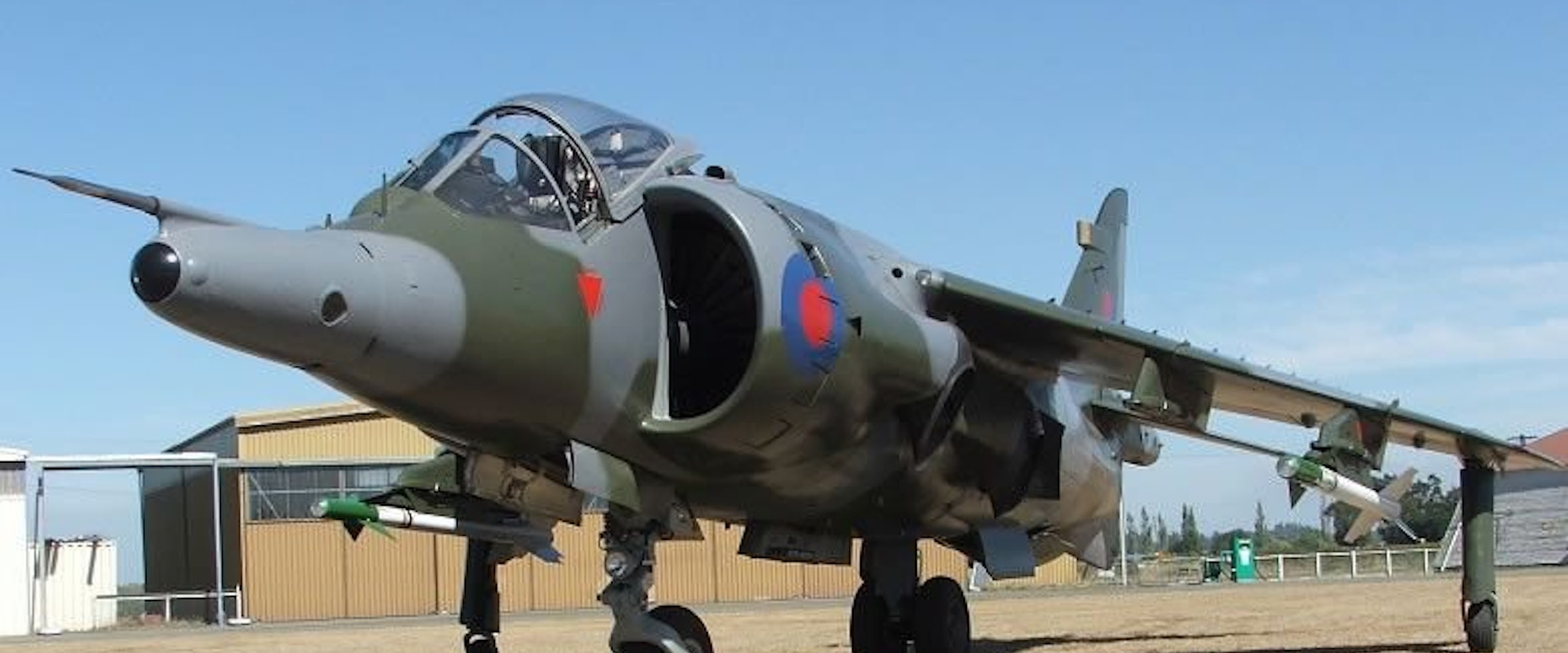
Hawker Siddeley Harrier GR.3 - see at Ashburton Airport, NZ!


Fly in a Boeing Stearman in Marlborough, New Zealand


Discover the history of combat aircraft at Omaka Aviation Heritage Centre

Originally established by a small group of passionate aviation enthusiasts, Omaka Aviation Heritage Centre in Blenheim has grown to become a site of national significance.

Today, the centre houses one of the world’s largest exhibitions of World War One aircraft, both static and flyable, as well as rare memorabilia from Sir Peter Jackson’s personal collection.

The Knights of the Sky exhibition brings human stories from the Great War to life with dioramas featuring lifelike mannequins and captivating scenes created by local film heroes Weta Workshop and WingNut Films.

Discover the stark contrast between the harshness of the trenches compared to the chivalry and the bravado of the fighter pilots flying above.

The Dangerous Skies exhibition takes visitors into on a journey through lesser-known stories of World War II, including the only female fighter aces. 

But to get a true appreciation of the remarkable vintage aircraft you can take to the skies with a joy flight in an open-cockpit Boeing Stearman, or really push your limits with some aerobatics in the Yak-3, a Russian WWII fighter plane.

de Havilland DH60G (Moth) fitted with a 100 hp Gipsy engine and with floats.

New Zealand’s early naval aviation history


Read about New Zealand’s early naval aviation history. Learn about the early two‑seat de Havilland DH60G (Moth) fitted with a 100 hp Gipsy engine and with floats.

Naval power was the keystone of New Zealand’s defence in the years following Armistice, as Admiral Jellicoe observed ‑ New Zealanders were ‘keenly alive to the importance … of a powerful and efficient Navy’, demanding ‘a strong Far Eastern Fleet … as soon as possible’.  The New Zealand government had sought advice on air policy, and Colonel Bettington was dispatched from the UK in 1919 to offer advice.  Bettington begged to differ with Jellicoe’s opinion, warning that ‘With present types of machines in large numbers, undefended cities could be made untenable in a single day and night,’ he added that:

Aviation provides a new and distinct striking force of tremendous potentiality. Before a formal declaration of war or expiry of an ultimatum, it may be possible for an unscrupulous neighbour to deal a paralysing blow at a vital Centre.

Despite enthusiasm from the likes of RAF Air Marshal Salmond and NZ Defence Minister Thomas Wilford, money did not stretch to developing an air service in the lean months after the war.

Modest numbers of aircraft were ordered, however, notably in 1929 orders were placed for two three‑seat Fairey IIIF biplanes, each fitted with a 570 hp Napier‑Lion engine and capable of being flown as a landplane or fitted with floats, and a two‑seat de Havilland DH60G (Moth), registration number 995, fitted with a 100 hp Gipsy engine; though normally a landplane it was also ordered with floats.  These aircraft were operated by the New Zealand Permanent Air Force (NZPAF).

The Moth arrived in Auckland by ship in July 1929.  In August Flight Lieutenant Sidney Wallingford, recently returned from serving at Calshot (UK) with No.201 (FB) Squadron RAF, began flying the Moth, configured as a landplane.

The continued focus on naval policy was highlighted by the NZPAF’s first active service in January 1930, when the Government ordered HMS Dunedin to sail to Samoa to provide assistance to the authorities.  After the war, the Western Samoan Islands had been mandated to New Zealand, a group of Samoans, sick of colonial administration, formed the Samoan League; locally called Mau.  Over the years, the Mau gathered momentum, and it became increasingly difficult to maintain law and order.  On board were Wallingford, two NZPAF Corporals, Smith and Sorrell, and the Moth 995.  Disembarkation of the seaplane at Apia six days later was tricky.  The aircraft was hoisted out on a ship’s crane, its wings unfolded; it was then lowered to meet the crest of a wave for safe release.  After the aircraft was successfully beached on a makeshift ramp and secured above the high‑water line the two corporals, a Naval signalman and seven stokers as armed guards for the aircraft set themselves up with hammocks in a village hut; this was base camp.  Wallingford was billeted with the Secretary for Native Affairs.

With no shelter for the plane, rain stalled attempts to get the Moth’s engine functioning properly and it wasn’t until 7.25 a.m. on 16 January that Wallingford was able to fly the NZPAF’s first operational mission ‑ a 2 hour 50 minute reconnaissance around the island of Upolu, trying to spot Mau in the bush.  The aircraft was primarily used for observation over coastal areas and cultivated land, leaflet dropping, a show of force, and attempting to stop small boats carrying Mau members across the straits to neighbouring islands an example of early Maritime Interdiction Operations.

To improve the offensive capability of the Moth a Lewis gun was fitted to allow Wallingford to fire on the dissident forces if necessary.  Mounts were fitted on each side of the cockpit for the gun, but the gun had to be aimed and fired with one hand while the pilot flew with the other.  Dunedin’s torpedo lieutenant constructed a 3lb dry gun‑cotton bomb out of a treacle tin, with the striker separated from the percussion cap by a whisky bottle cork.  The bomb was to be dropped by hand from the Moth and triggered by the striker pin releasing on impact.  Thus armed, the ‘bomber’ took off to look for action.  On 27 January 1930, the bomb was dropped ahead of a large boat thought to be taking Mau members to Savaii.  Fortunately it failed to explode, as the boat belonged to an Australian missionary returning to the island from the mainland.  A second, simpler bomb was constructed, but never dropped.

Peace talks between the Mau, Samoan elders and the colonial administration took place in early March 1930, and with promises of a settled future, HMS Dunedin returned to New Zealand on 12 March.  The Moth had flown 90 hours during its operations in Samoa, with the average sortie lasting two hours. The highest altitude reached, according to Wallingford’s logbook entries, was 8000 feet.

It appears the Moth was damaged while being reloaded onto the cruiser as well as during the stormy passage to New Zealand, so it was eventually scrapped at Hobsonville.  Parts of the aircraft, however, played a further role in New Zealand’s maritime aviation history. Francis Chichester was allowed to fit the floats to his Gipsy Moth ZK‑AKK Madame Elijah for his 1931 trans‑Tasman flight Auckland to Sydney via Norfolk and Howe Islands.

In 1930 staff numbers grew at Hobsonville with the arrival of additional aircrew and airmen apprentices, fresh from a course at Trentham Army Camp.  The development of Hobsonville was halted in 1931, leaving the base with no maintenance facilities of its own, although the base comprised of married quarters, workshops, mooring‑dolphin, sea‑wall apron and seaplane hangar block.  The base’s float‑equipped aircraft continued to develop naval‑cooperation duties with units of the New Zealand Division of the Royal Navy. The biplanes were engaged in torpedo, gunnery, spotting and anti‑aircraft exercises.

HMS Diomede was dispatched to the East Indies when Italy invaded Abyssinia in 1935, it was intended that the cruiser should return to New Zealand but in her absence the Government accepted an Admiralty offer to commission a Leander‑class cruiser as a unit of the New Zealand Division. The Diomede paid off in Britain on 31 October 1936, and her ship’s company transferred to HMS Achilles, which was commissioned the same day. The new cruiser sailed for Auckland on 22 April but had her plans interrupted when she was ordered to join the Second Cruiser Squadron of the Home Fleet at Gibraltar.  The Italian campaign in Abyssinia and increasing political unrest in Spain created a tense situation in the Mediterranean.  From 1 May until the fleet dispersed in July, Achilles operated with the Squadron.  She finally left Gibraltar on 17 July, arriving at Devonport on 6 September.

Five months later, on 15 February 1937, HMS Dunedin bade farewell to New Zealand after her long service in the South‑west Pacific.  She arrived in Portsmouth late in March and her ship’s company transferred to HMS Leander, which was duly commissioned for service with the New Zealand Division.

United Airlines Boeing 777-200


The Albatross: A 1950s Seaplane Finds New Purpose in the 2020s


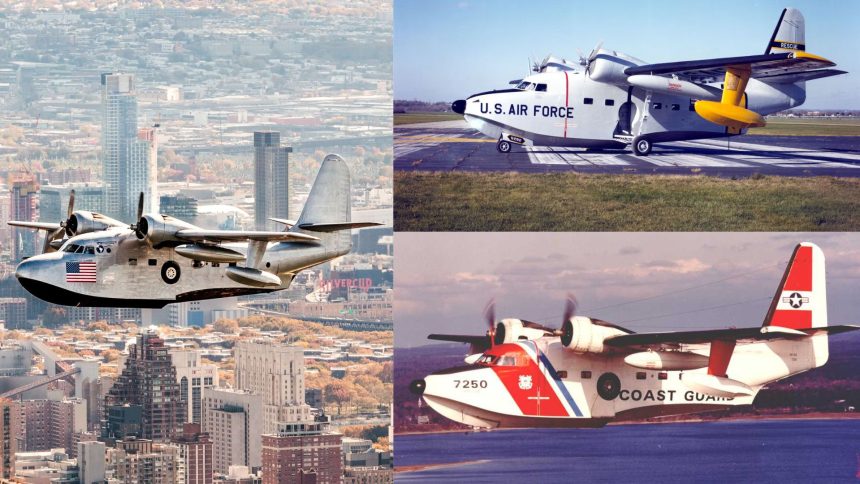
The original Albatross rescued pilots from cold seas and served for decades with the Air Force and Coast Guard. It proved that an aircraft could land on water, snow, or runway and still remain reliable. Today, Albatross 2.0 brings that same idea back, but with modern engines, certification, and economics shaped for a different era.

Kapil Kajal
Kapil Kajal

The modern Albatross 2.0 amphibious aircraft (left panel) alongside legacy Grumman HU-16 Albatross variants, one in US Air Force SA-16B gray camouflage (top right), and the other in US Coast Guard UF-1G orange SAR livery (bottom right).
See full article here https://vintageaviationnews.com/warbirds-news/albatross.html 


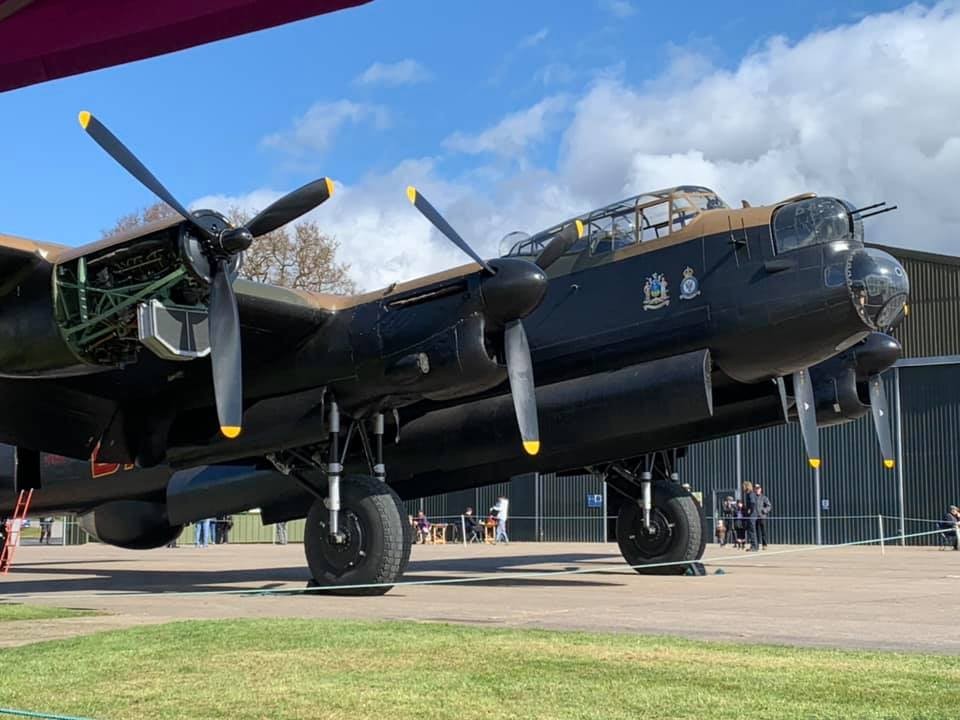
Avro Lancaster B.VII NX611 ‘Just Jane’ – Restoration Update 254

The latest restoration report highlights continued progress on Avro Lancasters NX611 and NX664, with new fuselage skins installed, nose section work advancing, and key structural components nearing delivery.

Guest Author
Guest Author
Photo by David Kavanagh

AirCorps Aircraft Depot

The latest progress report from project manager Andrew Patton, republished with permission, outlines continued forward momentum across the restoration of Avro Lancasters NX611 and NX664 at the Lincolnshire Aviation Heritage Centre (LAHC) in East Kirkby. With recent work focusing on fuselage skinning, nose section repairs, and the supply of critical structural components. Work continues to advance steadily on both aircraft, with recent activity marking an important step forward in the structural restoration of NX664’s rear mid-fuselage and ongoing progress across the wider programme.

More here - https://vintageaviationnews.com/restorations/avro-lancaster-b-vii-nx611-just-jane-restoration-update-254.html#google_vignette

Wings over Houston 2025: A Warbird-Focused Return to Form


Wings over Houston 2025 marked a welcome return to the event’s warbird-focused roots, helped in part by the absence of jet teams and a renewed emphasis on historic aircraft. Nigel Hitchman attended the show and captured a strong lineup ranging from dual Boeing B-29s and rare Vertol CH-46 Sea Knights to classic World War II and Vietnam-era warbirds, documenting one of the show’s strongest editions in years through both words and photographs.

Click here to read the full story

Republic P-47N Thunderbolt, Thunderbolt flew its first combat mission--a sweep over Western Europe. Used as both a high-altitude escort fighter and a low-level fighter-bomber, the P-47 quickly gained a reputation for ruggedness. Its sturdy construction and air-cooled radial engine enabled the Thunderbolt to absorb severe battle damage and keep flying.


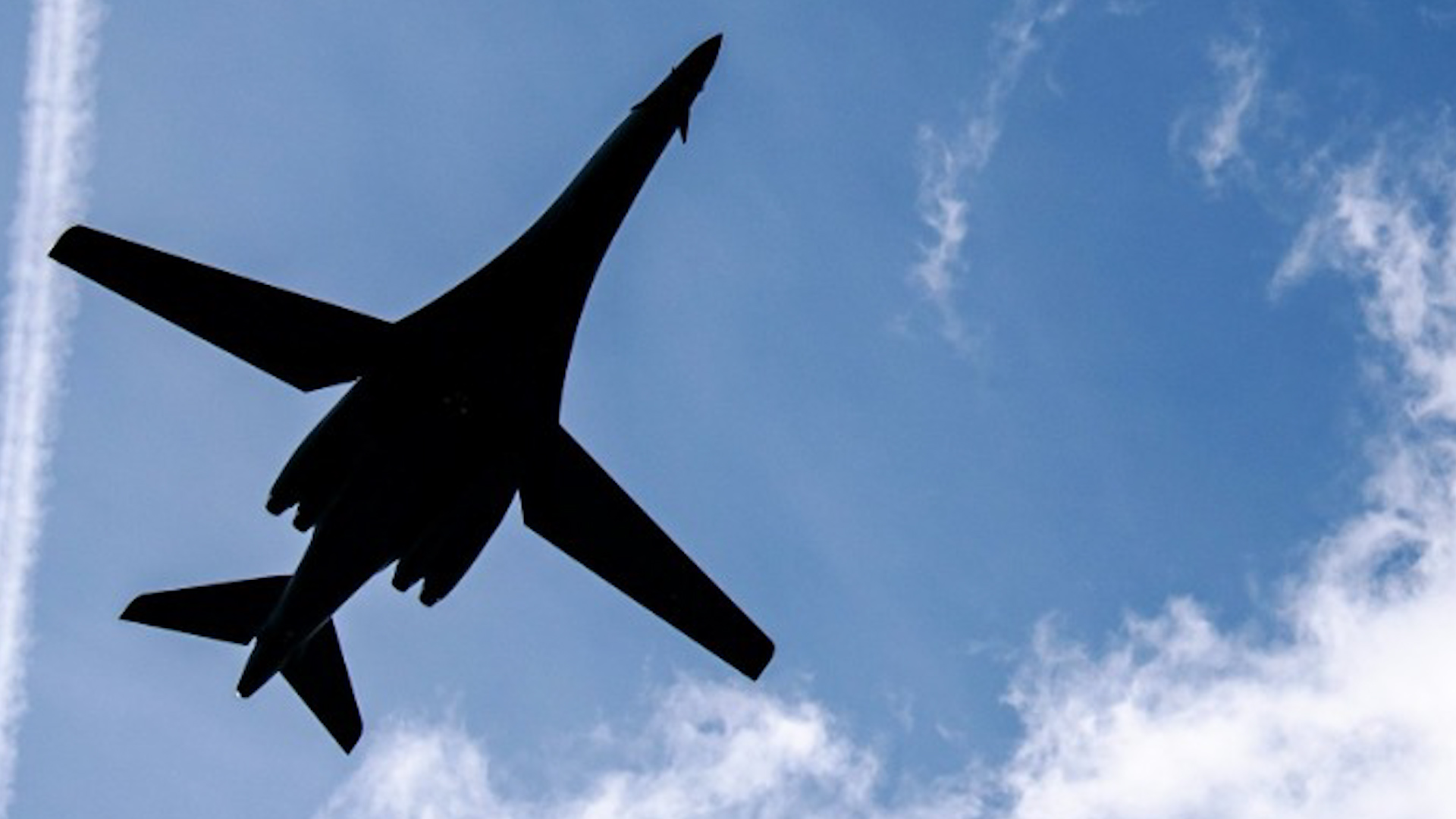
The B-1 Lancers return to RAF Fairford as an old bomber finds a new conflict

By - Xenia Zubova 9th March 2026 at 3:01pm US Air Force B-1B Lancer arrives at RAF Fairford (Picture: US Air Force) B-1 Lancer bombers are b...