
U.S. naval aviation equipped with long-range air-to-air missiles and a B-2 stealth bomber held an integrated maritime strike exercise off California, the Air Force announced Tuesday.
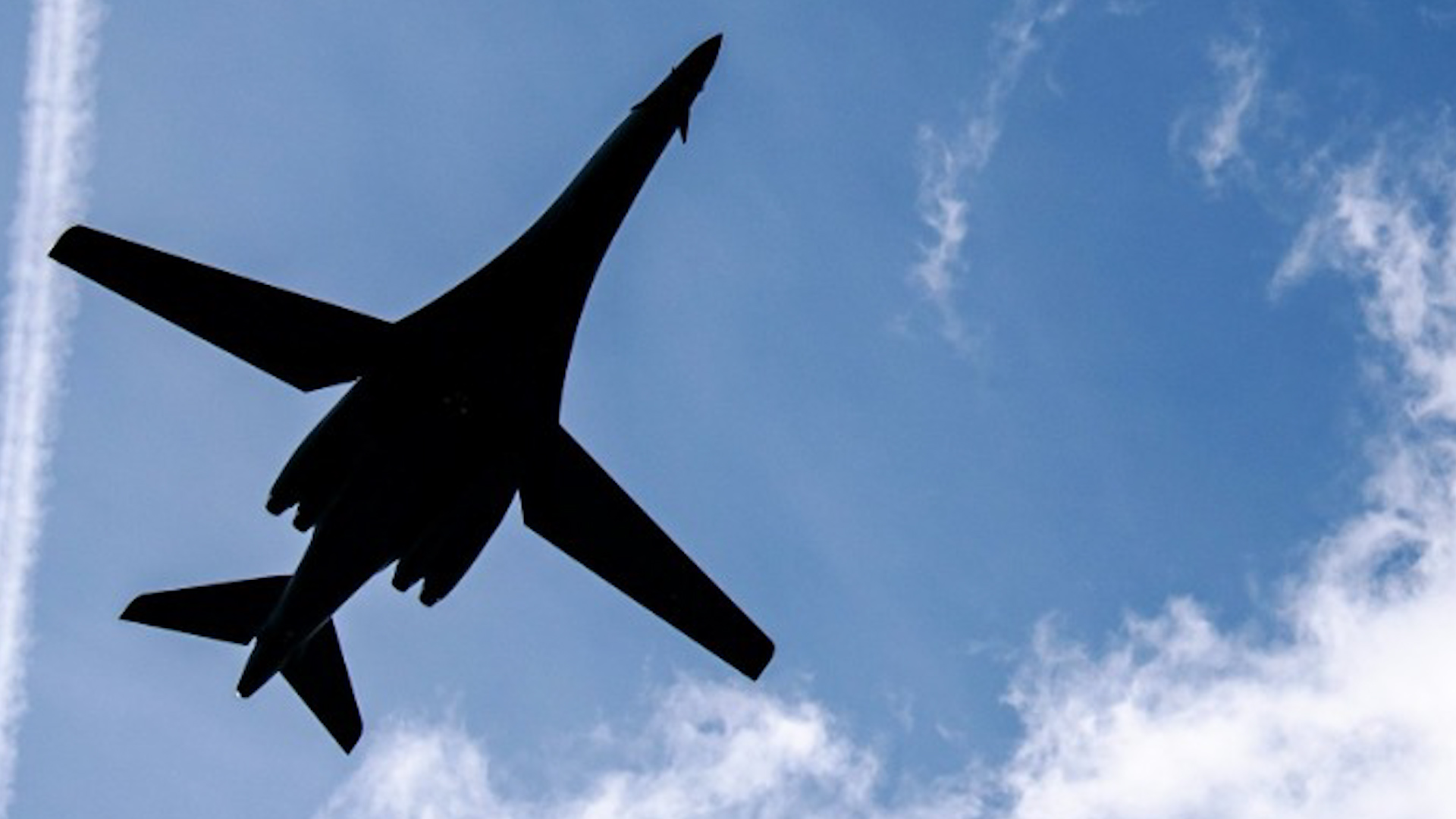
Fighters from Carrier Air Wing (CVW) 11 – the naval aviation component of the Theodore Roosevelt Carrier Strike Group – trained alongside at least one Spirit strategic bomber from the 509th Bomb Wing, flying from Whiteman Air Base, Mo., at an unspecified date.
While the two branches regularly train in long-range maritime strike missions off the West Coast, the publicized drills highlighted the Navy’s new AIM-174B “Gunslinger” missiles and the increased involvement of strategic bombers in anti-ship applications. Two F/A-18E/F Super Hornets fielded the air-launched SM-6s during the drill.
In a Naval Institute Proceedings article, Vice Adm. Daniel Cheever, Commander, Naval Air Forces and Naval Air Forces Pacific Fleet, described Gunslinger as a missile that would allow the fleet’s Super Hornets to “out-stick adversary fighters and operate inside the weapons engagement zone.” Gunslinger is the longest-range air-to-air missile to enter American service since the Cold War-era AIM-54 Phoenix. The missile has been fielded on forward-deployed naval fighters in Japan.
The long-range munition came as China developed increasingly sophisticated fighters, bombers and missiles – threats to American aircraft carriers. Since Washington’s deployment of carriers to the Third Taiwan Strait Crisis, and Beijing’s inability to counter them, People’s Liberation Army area denial forces operating from mainland bases have evolved to extend their reach across the first island chain. An air-launched SM-6 will enable the U.S. Navy’s mainstay carrier fighters to better counter these threats at extended ranges.
For the Air Force, the B-2 has taken center stage in the service’s anti-ship warfare developments, primarily in the testing and expeditionary deployment of Quicksink. The service has eyed the modified Mark series bombs to bolster its ship-sinking capabilities amid concerns of countering the People’s Liberation Army Navy in the Indo-Pacific. Precision strike munitions such as advanced long-range anti-ship missiles could run dry due to inadequate and previously expended stockpiles in a prolonged conflict with China.
In September, a B-2 from Whiteman joined Royal Norwegian Air Force F-35 stealth fighters to strike a maritime target with Quicksink in the North Atlantic. The service highlighted the test as a sign of the Spirit’s “evolving role in maritime strike.” Modifying the unguided bombs with seekers capable of striking moving vessels could address a shortage, but aircraft deploying these weapons will have to operate closer to their targets and at higher altitudes compared to traditional anti-ship missiles.



No comments:
Post a Comment